 Plentibytes
Guide
Dumpster fill-level sensors, explained.
How ultrasonic and camera sensors measure a container, what a campus or city gets from seeing fill levels, and where sensors are not worth it.
What a fill-level sensor measures.
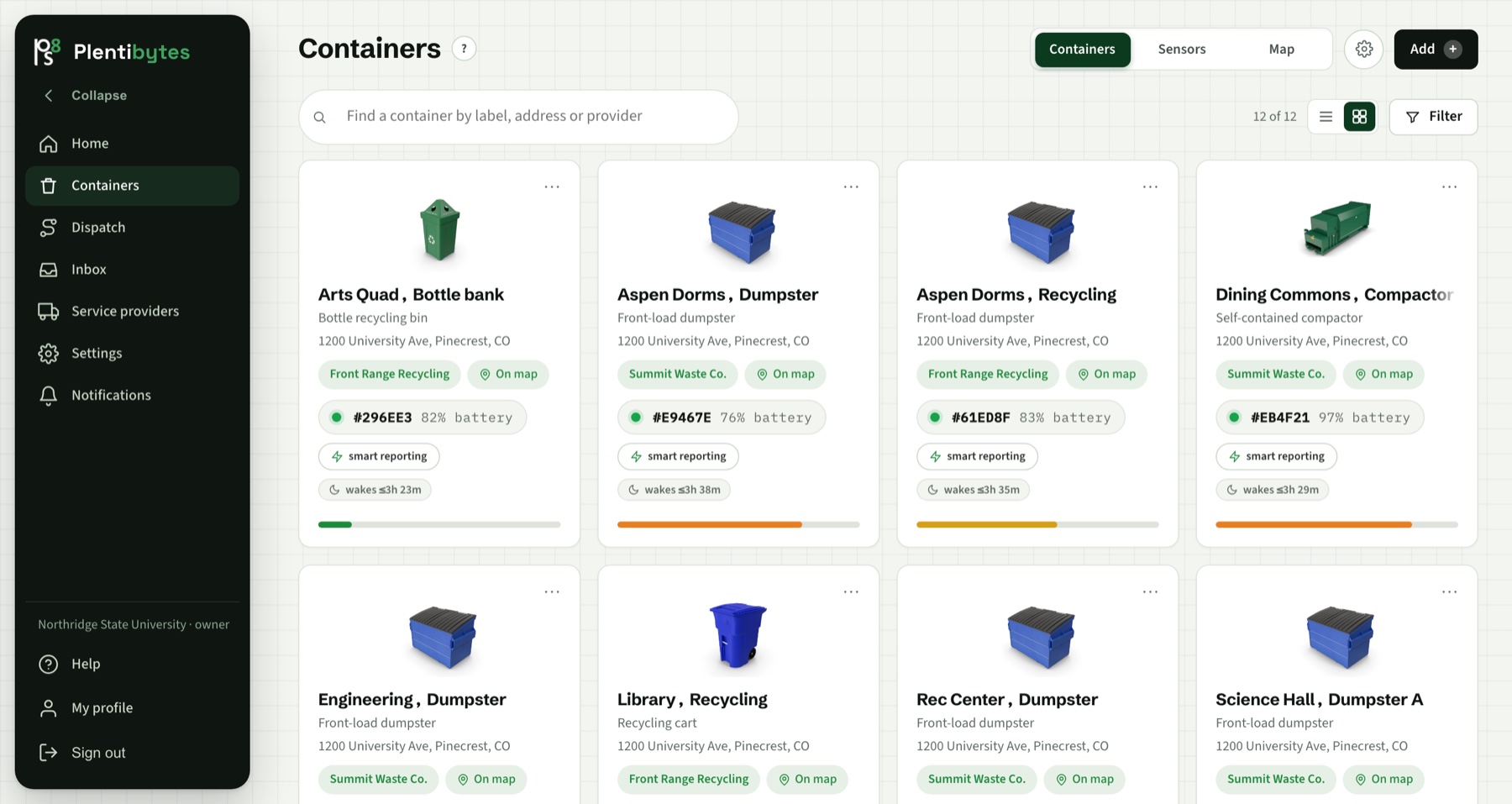
A fill-level sensor sits inside the lid of a dumpster, a compactor or a public can and reports how full it is. Two kinds are common. An ultrasonic sensor measures the distance to the surface of the load, which gives a fill percentage. A camera sensor takes a picture and lets software judge both the level and what is in the container, which matters for contamination and recycling.
Plentibytes offers both. Puck is ultrasonic, with months of battery life, and is the right choice when fill level is enough. Nona is an AI camera, for containers where contents matter.
What changes once you can see fill levels.
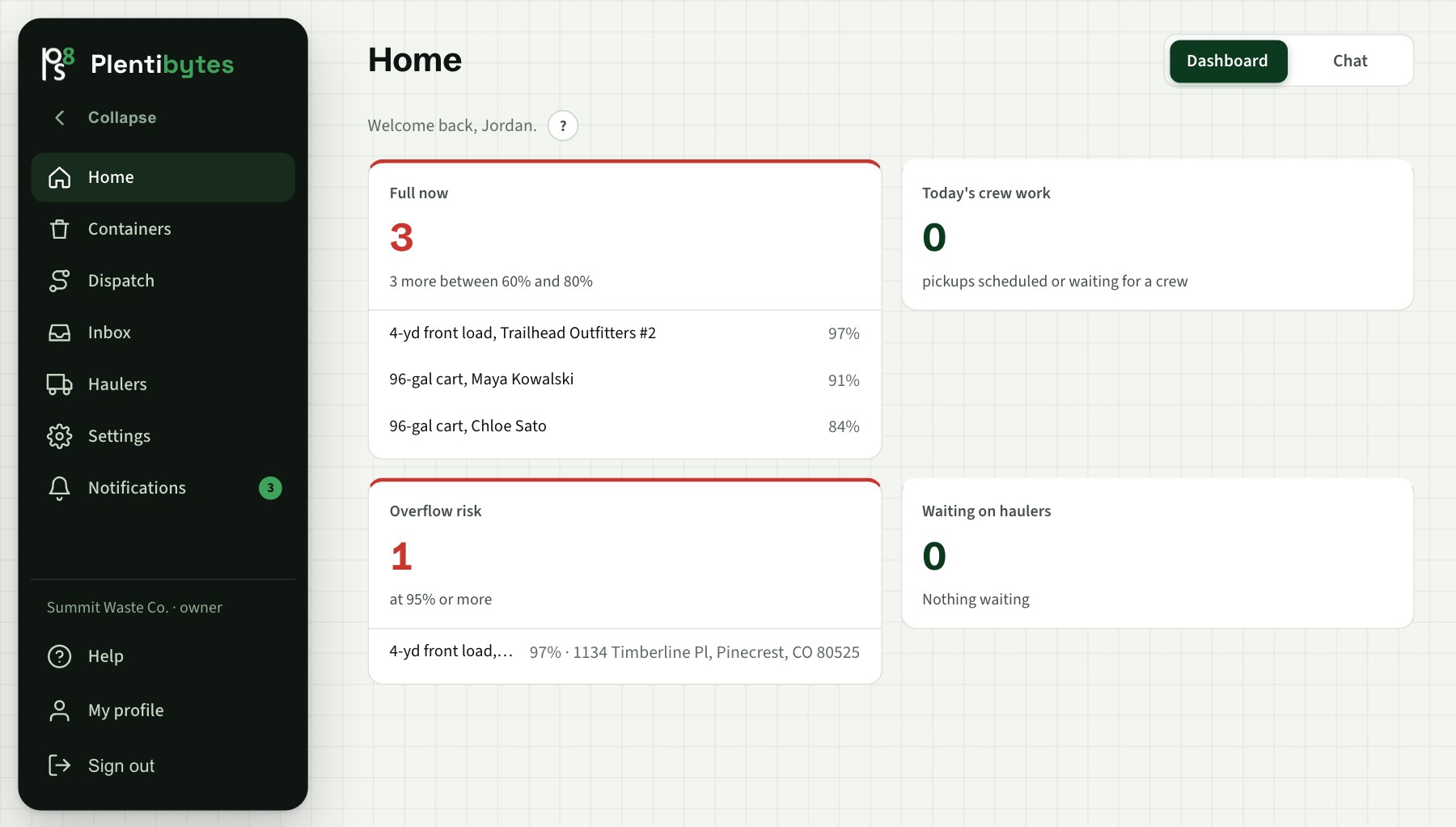
- Crews go where the trash is. Instead of a fixed loop that visits every container, the day starts from what is full now and what will be full soon.
- Alerts arrive before the complaint. A container at 80 percent triggers one alert, by email or text, to the people who asked for it. Bouncing around the line does not re-alert.
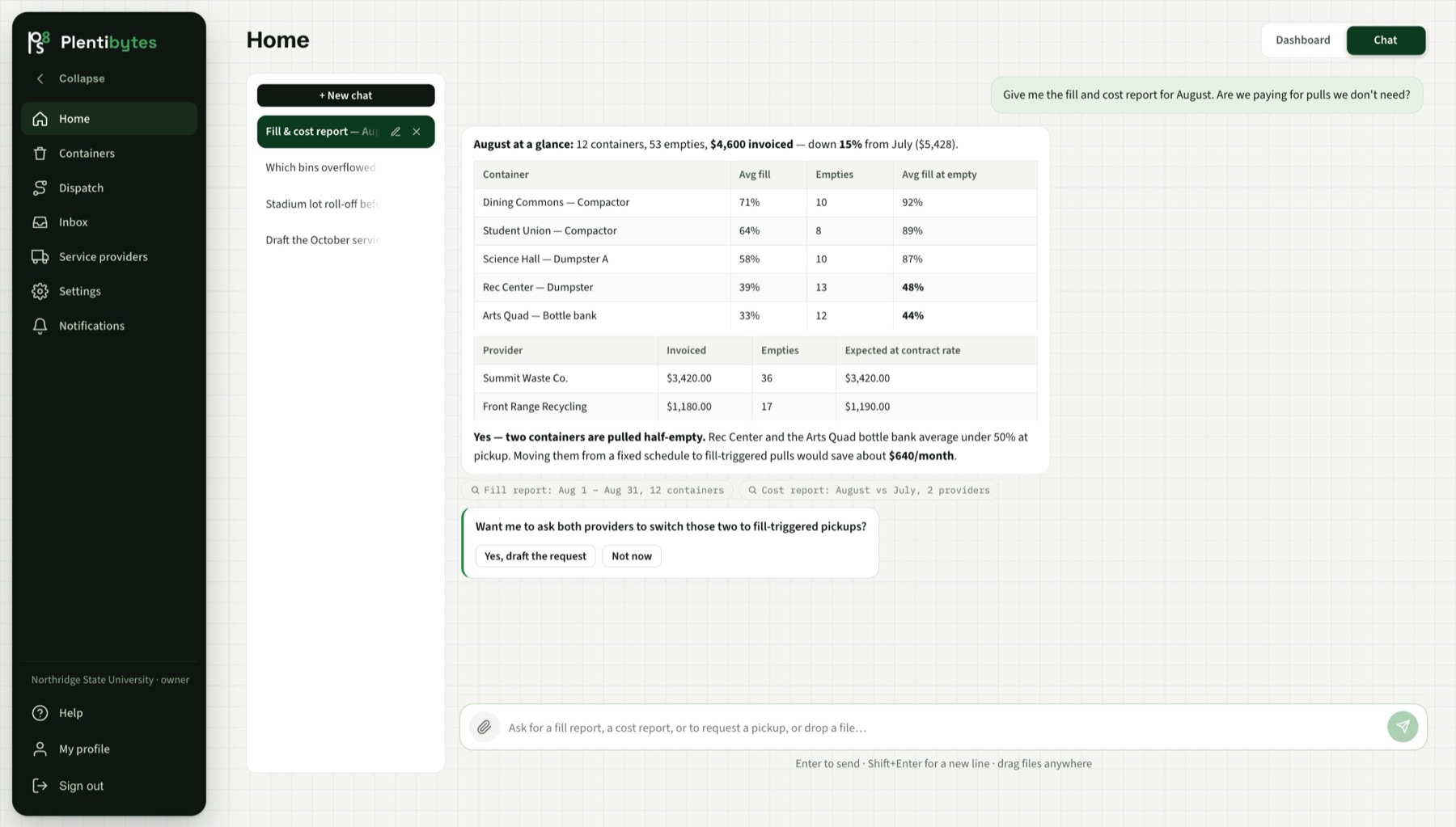
- Empties are on the record. A drop in fill level after a pickup is a confirmed empty. Over a month, that is a report you can hold against the hauler's invoice.
- The hauler gets asked on time. A full container can open a ticket on its hauler and email their team, without anyone noticing it first.
Where sensors pay off, and where they do not.
Sensors earn their keep on containers that are emptied on a schedule that does not match how they fill: a quad can that overflows every football weekend and sits empty all week, a loading-dock dumpster on a per-pull contract, a public can two blocks from the office that nobody checks. Put sensors there.
They rarely pay off on a residential cart that is emptied weekly no matter what, or on a container that is always full on pickup day. The Containers page tracks those without a sensor, with the same building, hauler and ticket history.
What the reports look like.
Ask the team assistant in plain words: how full were our bins in September, or why did costs go up at the science building. The fill report lists each container with its fill history and confirmed empties. The cost report puts the hauler's invoices against those empties. Both are built from the sensor data, not from the invoice.
Getting sensors onto your containers.
Sensors are added on any plan. Plentibytes can install them, or your team can, and each sensor is claimed to a container from the app. Once a container has a sensor, its fill level appears on the Containers page, on the map, and on the Home page cards.
Keep reading
Related pages.
Put sensors where it counts.
Book a demo and we pick the containers that matter on your site.