 Plentibytes
"We find out it overflowed from the complaint."
Fixed loops empty the wrong cans
Crews visit every can on the route, half of them nearly empty, while the one by the pavilion overflows before anyone hears about it.
For universities, campuses and property groups
Fill levels from sensors, alerts before the overflow, crew routes built from what is full, and tickets to your hauler from the same page.
The problem
"We find out it overflowed from the complaint."
Crews visit every can on the route, half of them nearly empty, while the one by the pavilion overflows before anyone hears about it.
"Which building was that about?"
Dozens of buildings, containers that bill differently by site, and a hauler's phone line. Who called about what is archaeology.
"Did the hauler come Thursday?"
Service contracts bill per pull. Without a record of what was emptied when, the invoice is the only evidence.
What runs it
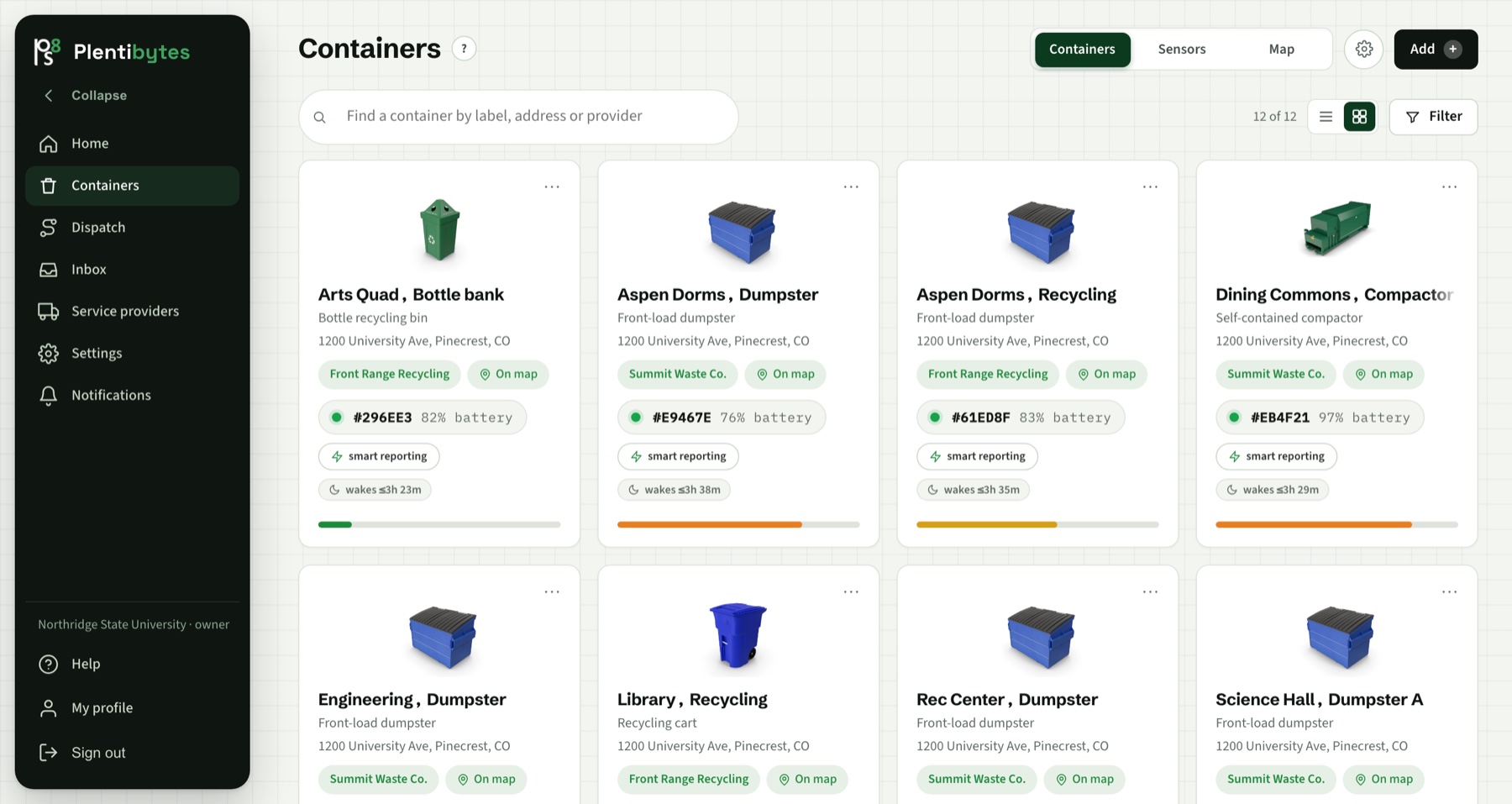
Every container with its building, its hauler and its fill level. Search by label, address or provider.
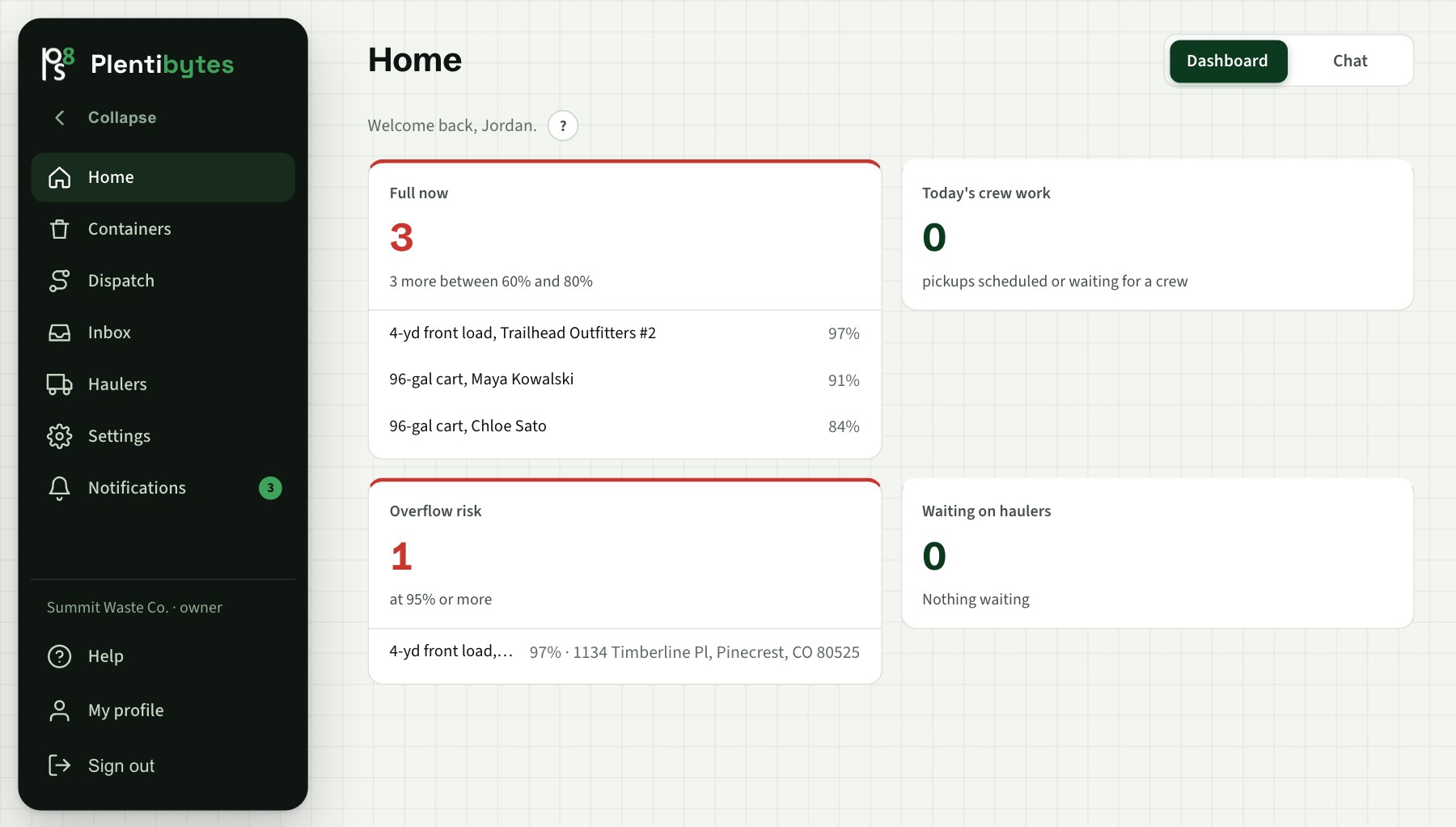
Containers at 80 percent or more, highest first, and how many are between 60 and 80. Crews go where the trash is.
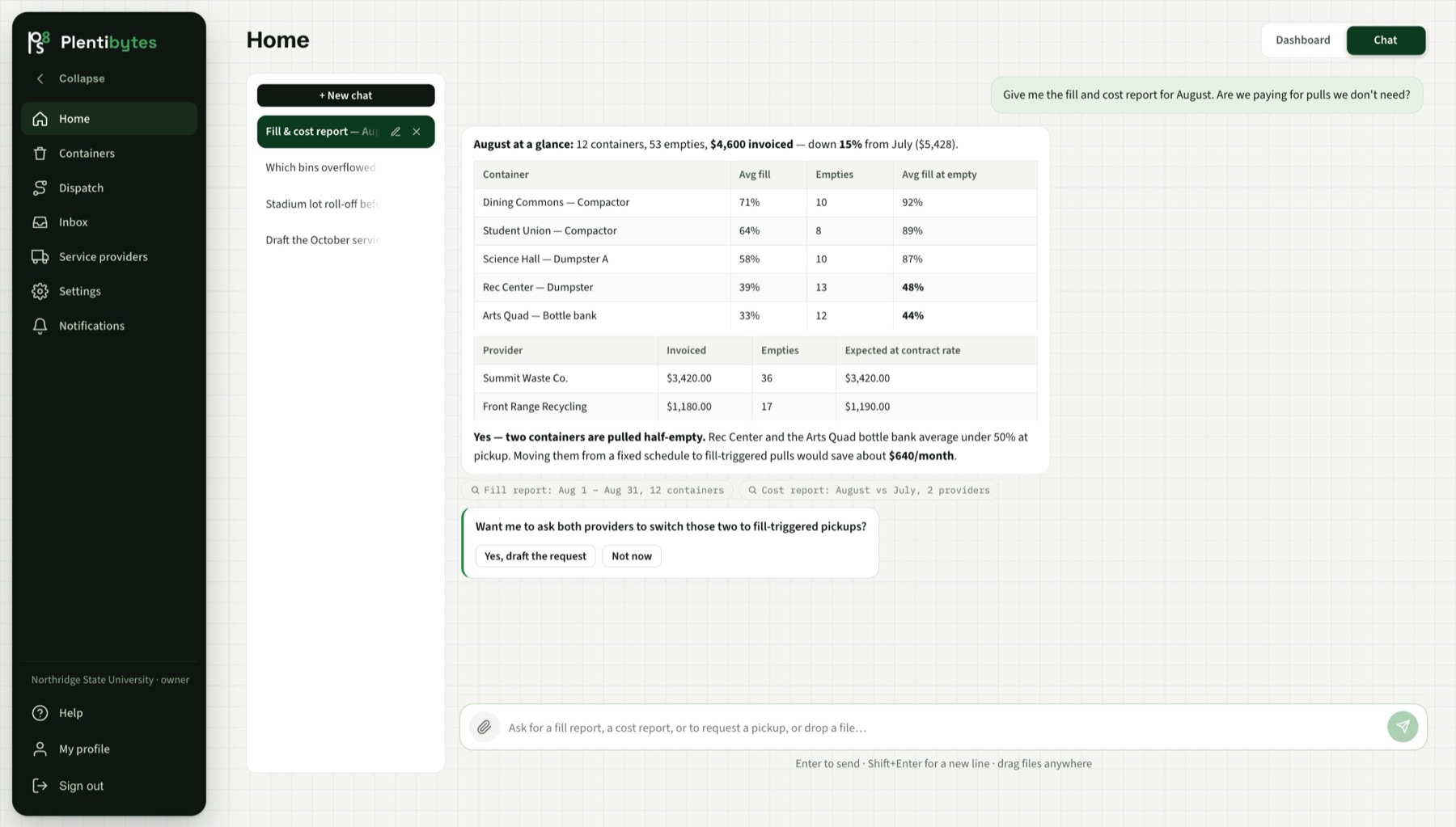
Ask the team assistant for a fill report or a cost report over any month. Empties confirmed by the sensor, not the invoice.
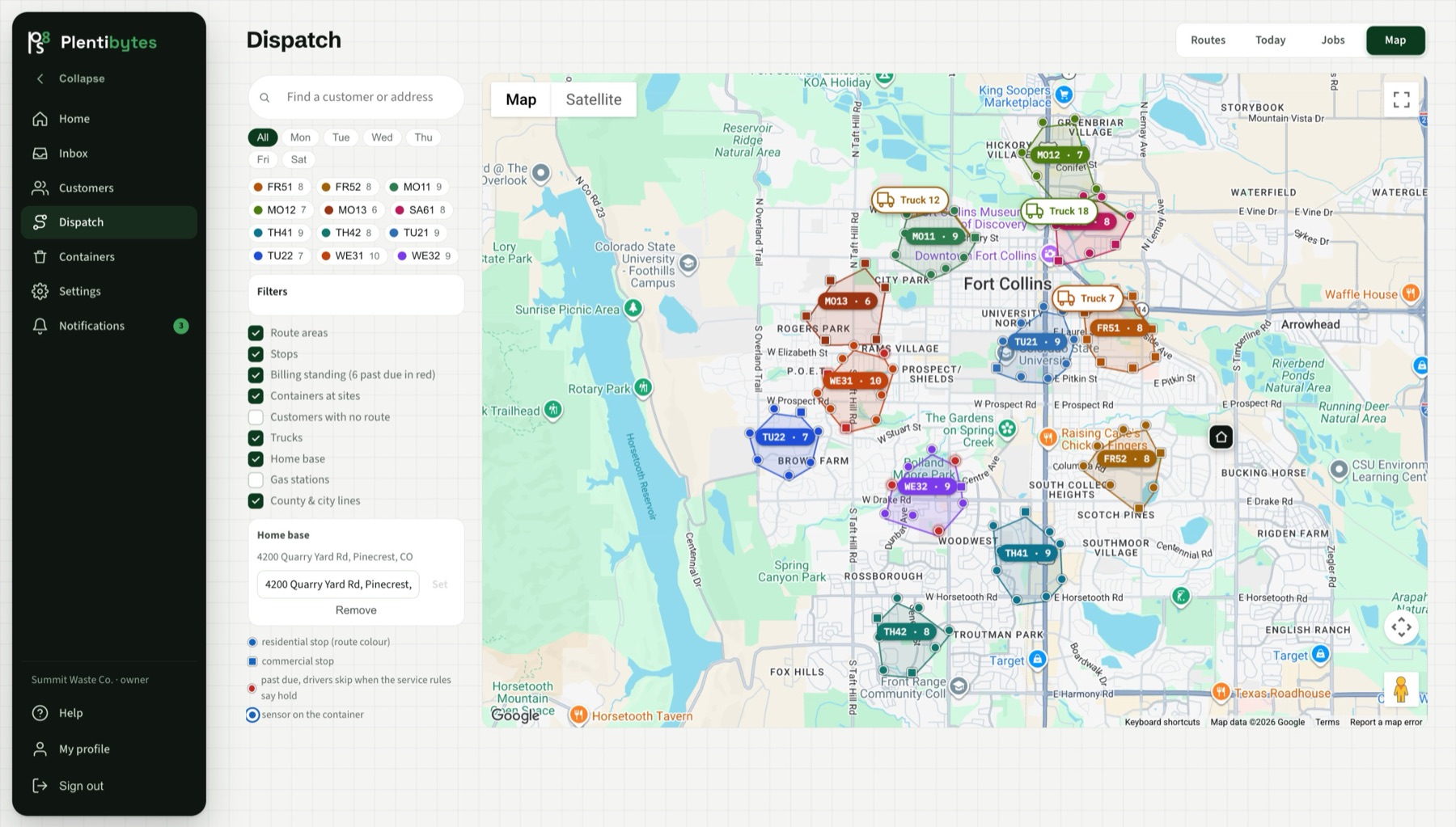
Today's work and the map for your own crews, with live vehicles from your GPS.
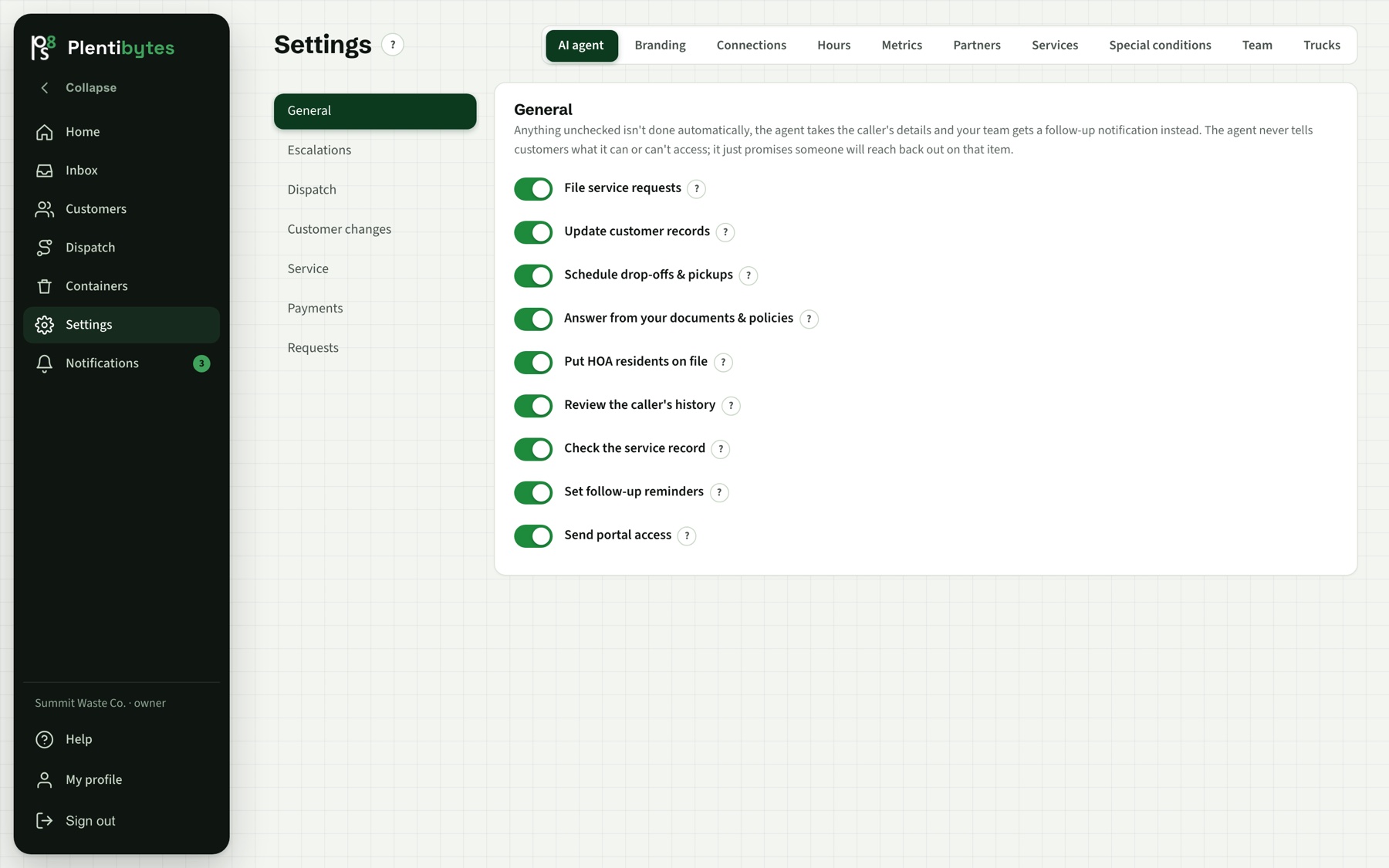
When a container reports full: open a ticket on the hauler, email their team, or have the agent call them. Each is a switch.
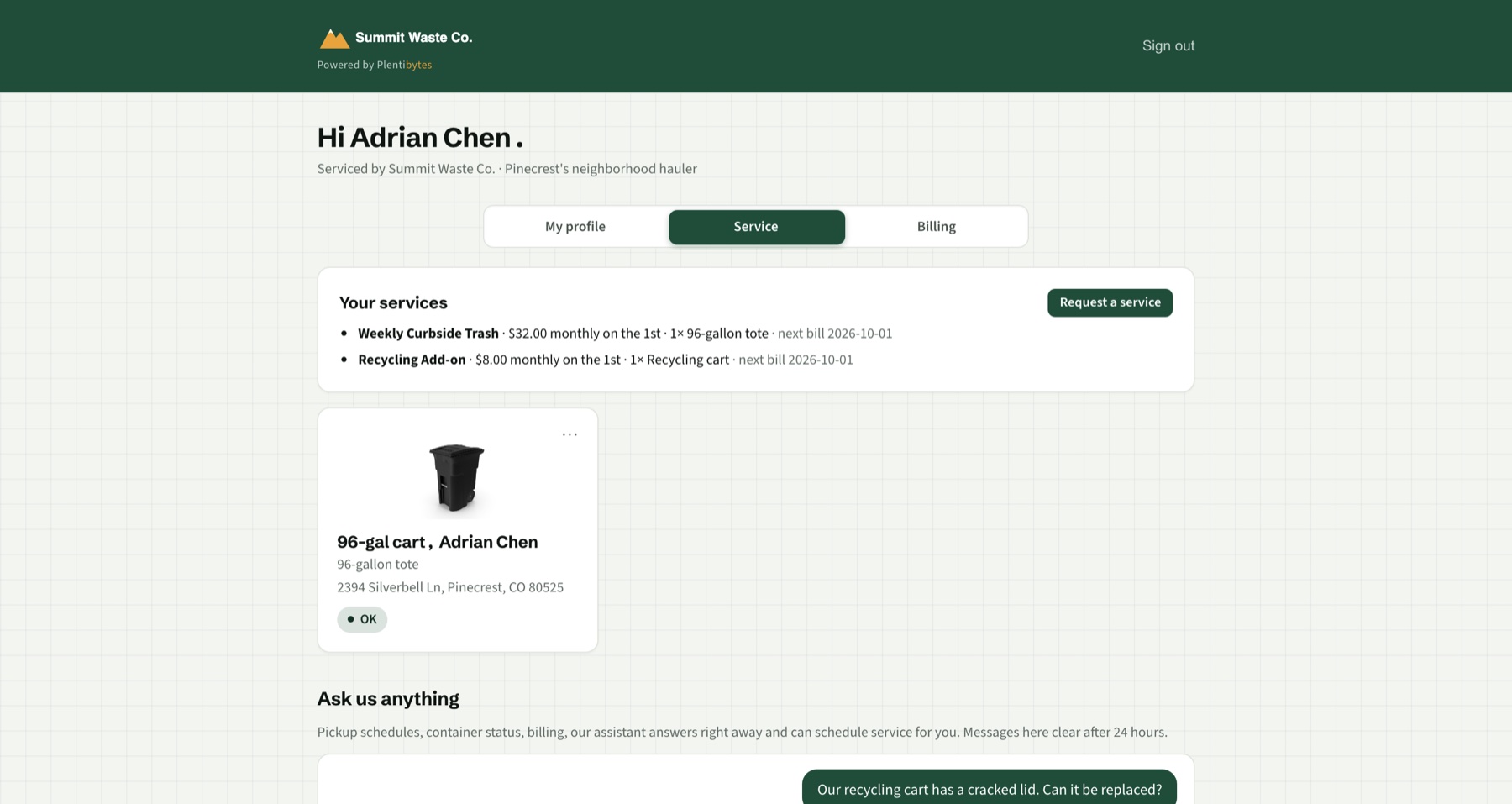
Your haulers sign in with a one-time code, see their containers and tickets, and their updates move the ticket.
Sensors
Put sensors where it counts
Book a demo and we map your buildings, pick the containers that matter, and show what the reports look like on your campus.
Book a demoCommon questions
No. Put them where overflow embarrasses you: quads, dining halls, loading docks, event lots. Every other container is still in the same list with its building, its hauler and its tickets.
Puck measures fill level by ultrasound. Nona is an AI camera that also identifies contents. Both report to the same Containers page, and a container at 80 percent triggers an alert by email or text.
Yes. A full container can open a ticket on its hauler, email their team and, on Business Complete, have the agent phone them. The hauler answers from their own portal or by email.
Not for a campus. There are no customers, so the customer agent, the portal and billing are off. The team assistant is on: ask it for a fill report or a cost report in plain words.
Keep reading
Book a demo and we walk your buildings, your containers and your hauler contract through it.