The platform

One platform. Two experiences.

Your customers get effortless answers — by text, email, or a simple portal. Your team gets the command center behind it: containers, sensors, routes, and every conversation in one place.

Plentibytes platform dashboard showing dumpsters with live fill-levels, sensor assignments, GPS locations, and job status

Built around your worst days

The problems that eat your week, handled.

"The office phone never stops ringing."

Every "where's my pickup?" answers itself.

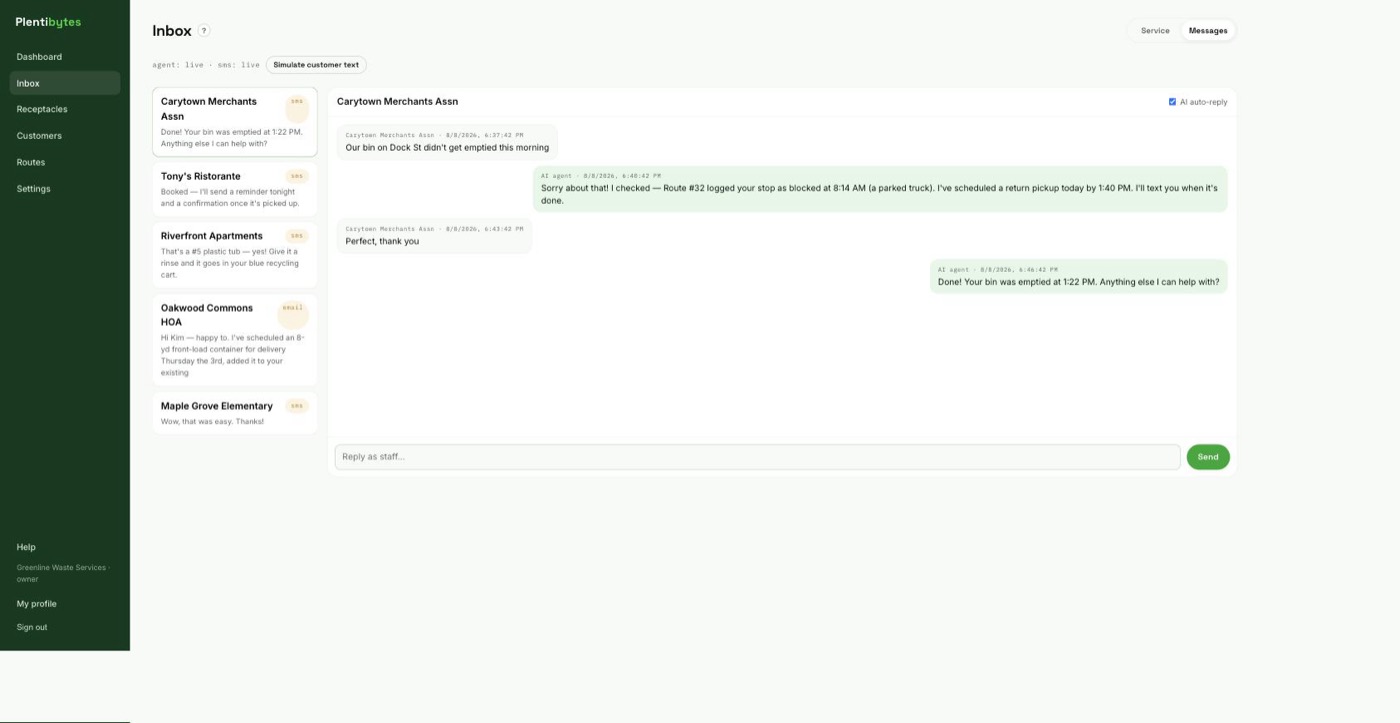
It's 7:05 AM and the calls have already started — pickup days, schedule changes, "was I billed twice?" With Plentibytes, the AI assistant answers every one of them by call, text, or email, using each customer's real account. Your team reads every thread in the inbox, and jumps in personally whenever they want.

The Plentibytes inbox showing a customer's missed-pickup text resolved by the AI assistant, with the full conversation thread and an AI auto-reply toggle

"Requests live on sticky notes, voicemail, and someone's memory."

One queue. Every request. Photo evidence attached.

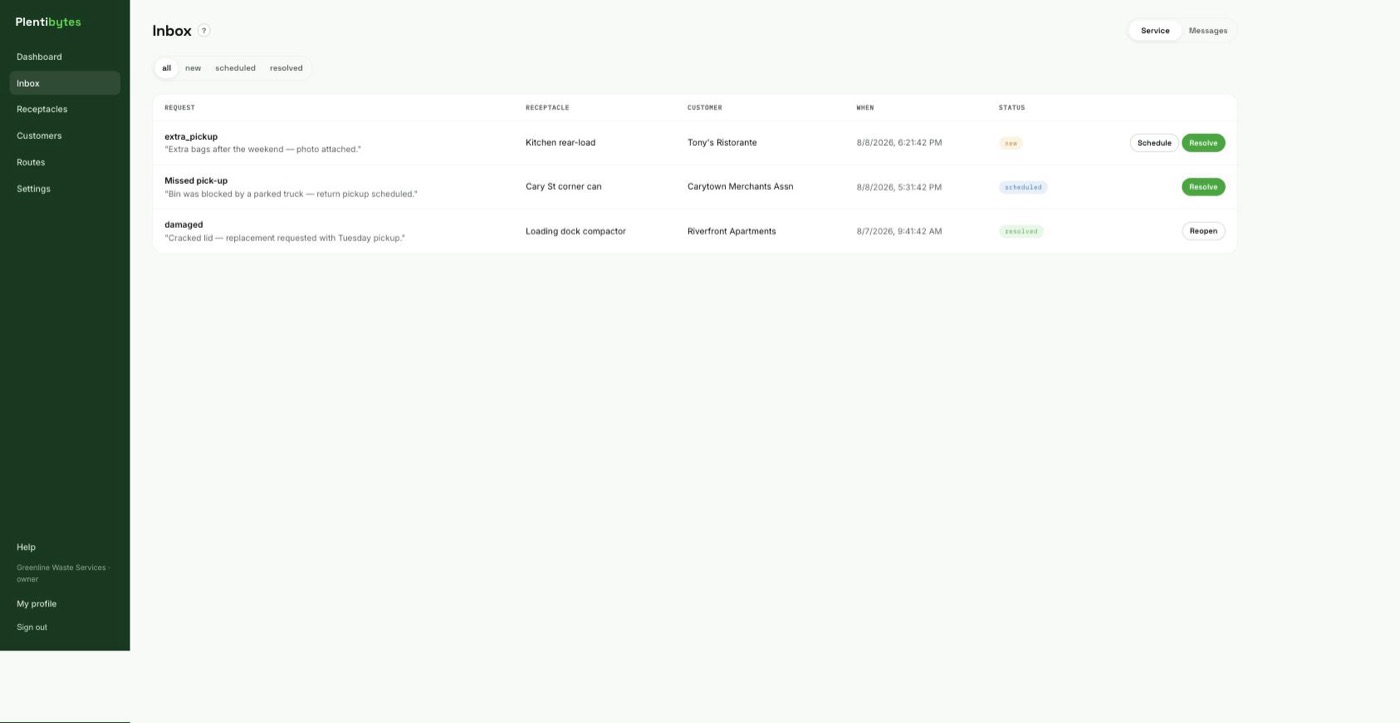
A missed pickup reported by text, an extra-pickup request with a photo of the overflow, a cracked lid from the portal — they all land in the same service queue: new, scheduled, resolved. Nothing depends on who picked up the phone, and nothing gets lost on a windshield notepad.

The Plentibytes service queue showing an extra pickup request, a scheduled missed-pickup return, and a resolved damage report with status labels and one-click actions

"We find out a bin overflowed when the complaint comes in."

See every container's fill level before it's a problem.

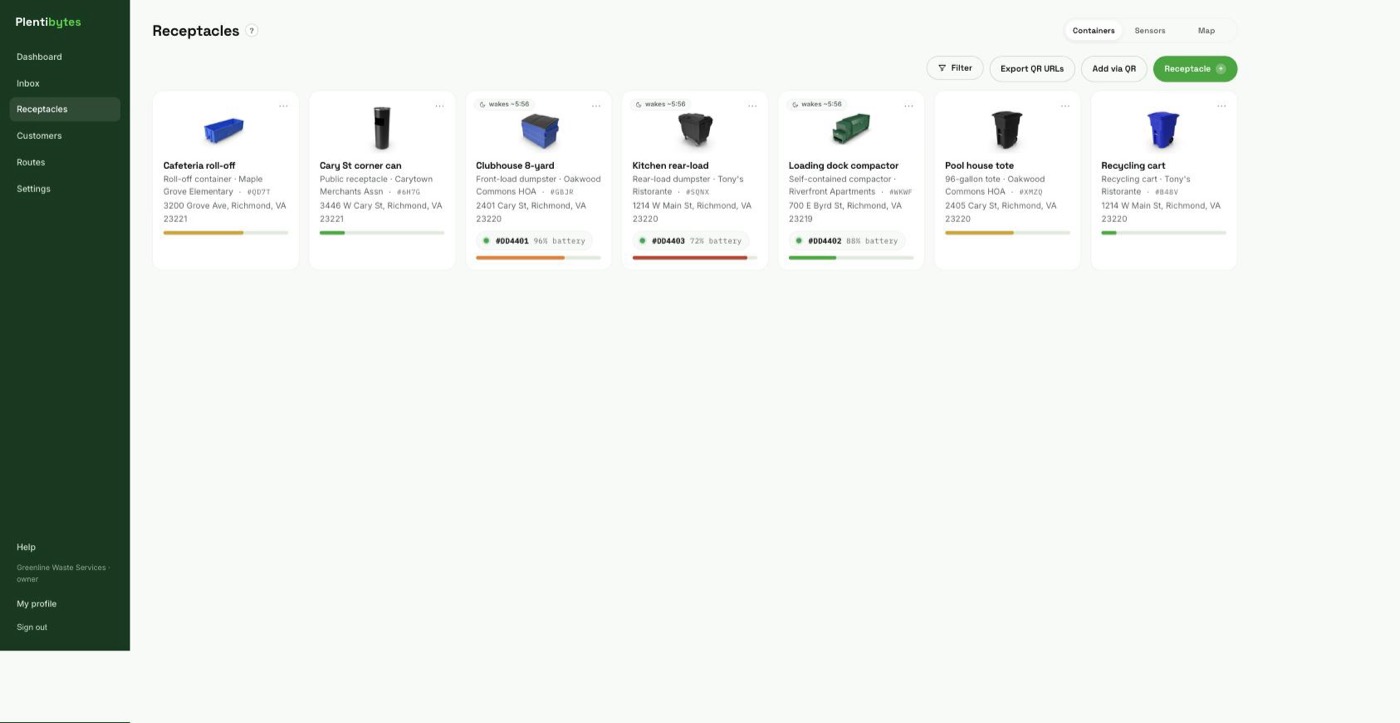
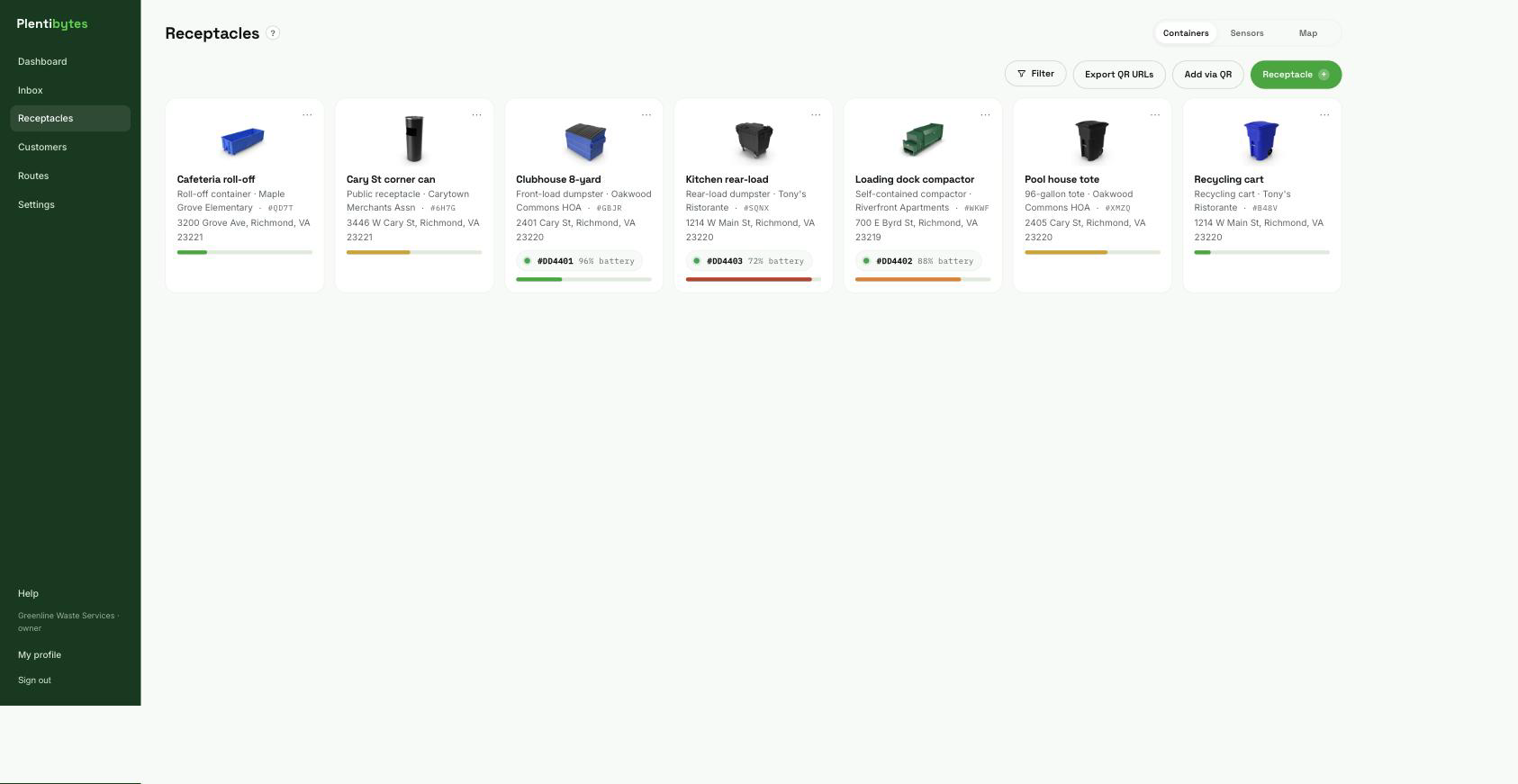
Every container on one screen — with live fill bars, battery levels, and sensors that wake up and report when a bin actually needs attention. Customers get a heads-up before overflow, dispatch sees which stops matter today, and nobody rolls a truck just to look inside a dumpster.

The Plentibytes receptacles view showing containers with live fill-level bars, attached sensors with battery percentages, and awake status chips

The part everyone asks about

Keep your existing workflows. All of them.

Plentibytes isn't a rip-and-replace. It works through what you already have — your number, your email, your data — and everything it does lands in one dashboard for your review.

Your phone number

The AI sends and receives calls and texts on your existing business number — customers never learn a new one, and caller ID stays yours.

Your email address

Automated replies go out from your existing email, not a stranger's domain. Customers reply like they always have; the AI handles the back-and-forth.

Your systems & data

Customer lists, schedules, and billing stay where they are — we ingest what you have and layer on top. Change nothing until you want to.

Every message the AI sends or receives — every call, text, and email — is reviewable in your Plentibytes inbox. Pause the AI for any customer and take over the thread yourself, any time.

Two sides, one system

What your customers see. What your team sees.

For your customers

Two ways to interact — both effortless:

1. Just text or email

No app. No login. No hold music. Customers text or email your line and the AI answers with their real account — pickup days, schedule changes, billing questions.

They can even send pictures: "My container is damaged," "Can I recycle this?" — snap a photo, get an answer, 24/7. Damage reports and service requests are filed automatically, so your team sees them in the morning queue.

2. Or sign in to the portal

For customers who want the full view: a one-time code by email or text (no password to remember), their containers with live fill levels, one-tap service requests, and the same AI chat inside the portal.

For your team

The command center behind every answer:

Keep the workflows you already have

Plentibytes layers on top of how you run today — your schedules, your billing, your dispatch habits. Nothing has to be ripped out or re-learned before you see value.

Operations at a glance

Every container and sensor on a live map with fill levels, pickup schedules, optimized routes, and a drive mode built for phones in trucks.

Every conversation, reviewable

The inbox shows each customer's thread with the AI — jump in personally whenever you want, or pause the AI for any customer. Service requests flow into one queue: new → scheduled → resolved.

Built for teams

Roles and permissions for dispatchers, drivers, and account managers. Group customers that bill together — an HOA and its properties — and message them all at once when something changes.
Onboarding

We bring your data in. Your workflows stay yours.

Ingest what you have

We pull your existing world into the platform — customer lists and schedules scraped from your current website or systems, spreadsheet imports for the rest. No re-typing your business.

Tag the physical fleet

Pre-printed QR stickers for every container and pre-registered sensors: your crew scans, the platform fills in the rest — location captured from their phone on the spot.

Turn on the AI line

Your number goes live and the agent starts answering with your hours, schedules, and service notes. You watch every conversation from day one.

Capabilities

Everything a waste operation runs on.

Live container monitoring

Card and map views of every sensor with current fill-levels, so dispatch checks containers remotely instead of rolling a truck to look.

Smart alerts

Customers get a text and/or email when their containers near full capacity — before overflow becomes a complaint.

GPS asset tracking

Know where every container is at all times, enabling real-time inventory management across sites and customers.

Routing & dispatch

Build pickup routes from live fill data, assign drivers, and track stop-by-stop completion as the day unfolds.

Customers & invoicing

Manage accounts, jobs, and invoicing in the same place the operational data lives — no double entry.

AI customer agent

The callable and textable agent answers pickup, scheduling, and billing questions using your platform's live data — and creates jobs when customers request service.

How it fits together

From container to customer in three steps.

Sensors report

Nona and Puck sensors send fill-levels, contents, and locations over LTE-M cellular.

Platform decides

The platform turns readings into alerts, routes, and jobs your team can act on immediately.

Agent communicates

The AI agent keeps customers informed by call and text — and captures their requests back into the platform.

Learn about the sensors

See the platform with your own data.

Book a demo and we'll walk through your containers, routes, and customer calls on one screen.

Book a demo